
"defect removal"
2000 article(s) found
Classification and causes of defective beans in SCAA Coffee SCAA level: Italian mixed beans with secondary defects
CAA level: whole sour bean is a first-level defect; one whole sour bean = a complete defect name: local sour bean SCAA level: local sour bean is a secondary defect; less than half of a bean is sour bean, 3 beans = 1 complete defect cause: agriculture and treatment. Sour beans are caused by fermentation, and they are contaminated by microorganisms in many places in the process of harvest and treatment.

Classification and causes of defective beans in Fine Coffee SCAA
The growth environment of boutique coffee beans also has higher requirements. Generally grow at an altitude of 1500 meters or even more than 2000 meters above sea level, with appropriate precipitation, sunshine, temperature and soil conditions. Some world-famous coffee beans also have a special geographical environment, such as the alpine clouds in the Blue Mountains, the free shade provided by the afternoon clouds in Kona, and the volcanic ash soil in Antigua.

What are defective beans? how to calculate defective beans?
High-quality coffee beans are refined by water treatment. The coffee beans with less impurities can be obtained by the water washing method, but if the water quality and time are not properly controlled during the fermentation process, the coffee beans will easily be infected with the sour taste of excessive fermentation. and dry beans also need to pay attention to timely re-inspection to prevent coffee beans from being contaminated by wet ground and sundries. Processed

Classification and causes of coffee defective beans all black beans SCAA grade worm-eaten beans
Boutique coffee is fresh coffee. Whether it's food or drink, of course, the fresh the better, and so is boutique coffee. High-quality coffee should keep the coffee beans fresh before making, including the preservation of baked beans, and grind the coffee beans into powder before making, which is also to retain its original and best flavor. And the way of making hand-made coffee is such a way to make high-quality coffee.
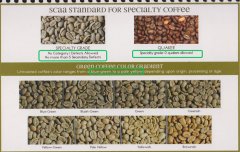
Standard of SCAA pecialty Coffee Fine Coffee Raw Bean
[SCAA "Specialty Coffee" standard for high-quality coffee raw beans] the raw bean defects of SCAA can be divided into two types: I and II. The requirement for premium coffee grade (specialty coffee) is: 1. There are no class I defects; 2. No more than 5 II class defects 3. There can be no "quaker" (0 quaker) Quick beans in cooked coffee beans. 4. The appearance of raw coffee beans
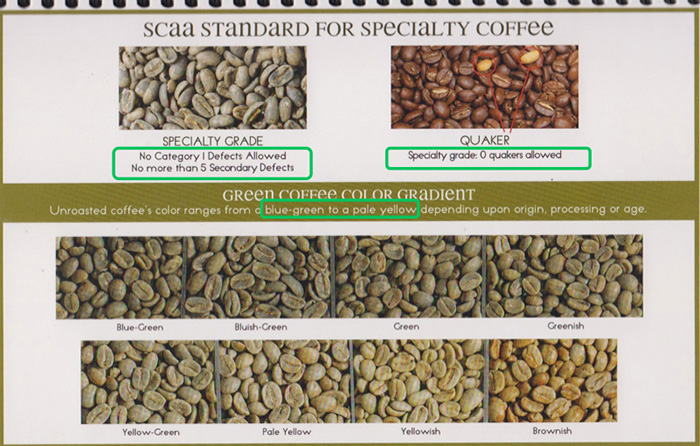
Boutique coffee beans: the standard of SCAA pecialty Coffee boutique coffee raw beans
The raw bean defects of SCAA can be divided into two types: I and II. The requirement for premium coffee grade (specialty coffee) is: 1. There are no class I defects; 2. No more than 5 II class defects 3. There can be no "quaker" (0 quaker) Quick beans in cooked coffee beans. 4. The color range of raw coffee beans is pale yellow (light yellow), yellow-green (

The standard of SCAA pecialty Coffee boutique coffee raw beans is necessary for a good cup of coffee.
The raw bean defects of SCAA can be divided into two types: I and II. The requirement for premium coffee grade (specialty coffee) is: 1. There are no class I defects; 2. No more than 5 II class defects 3. There can be no "quaker" (0 quaker) Quick beans in cooked coffee beans. 4. The color range of raw coffee beans is pale yellow (light yellow), yellow-green (

SCA Arabica Coffee Raw Bean grading Manual _ how do Arabica coffee beans be graded?
Professional coffee knowledge exchange more coffee bean information please follow the coffee workshop (Wechat official account cafe_style) [the standard of SCAA Specialty Coffee fine coffee raw beans] the raw bean defects of SCAA can be divided into two categories: I and II. The requirement for boutique coffee grade (specialty coffee) is that there are no Class I defects and no more than 5 II classes are missing.
Will defective beans affect the flavor of coffee? How to distinguish defective coffee beans?
Defective beans, if you communicate in the boutique coffee circle, you will probably know that its existence affects the flavor of a cup of coffee. If you usually have the habit of buying coffee beans and going back to make coffee, do you need to pick out defective beans when making coffee? Raw coffee beans will be graded after treatment, most of them

How to select coffee beans by hand?
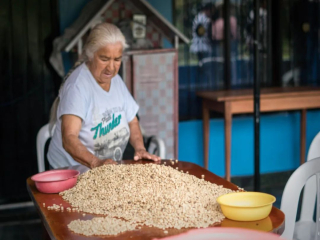
Hand selection: is the step of removing impurities and bad beans attached to delicious coffee beans. Coffee beans are often mixed with foreign bodies, such as stones, sawdust, pieces of metal, grains of soil, fruit of trees, and sometimes coins and glass. In coffee production areas, specific gravity bean selector (using wind power to classify according to particle size and weight) or electronic bean selector (removing defective beans according to color) will be used to prevent it.

What is the basic knowledge of coffee to choose beans by hand?
Hand selection: is the step of removing impurities and bad beans attached to delicious coffee beans. Coffee beans are often mixed with foreign bodies, such as stones, sawdust, pieces of metal, grains of soil, fruit of trees, and sometimes coins and glass. In coffee production areas, specific gravity bean selector (using wind power to classify according to particle size and weight) or electronic bean selector (removing defective beans according to color) will be used to prevent it.

What is hand-picked beans? The basic knowledge of boutique coffee beans
Hand selection: is the step of removing impurities and bad beans attached to delicious coffee beans. Coffee beans are often mixed with foreign bodies, such as stones, sawdust, pieces of metal, grains of soil, fruit of trees, and sometimes coins and glass. A specific gravity bean selector (using wind power to classify according to particle size and weight) or an electronic bean selector (removing defective beans according to color) is used in coffee production areas.
How to select coffee beans by hand
Hand selection: is the step of removing impurities and bad beans attached to delicious coffee beans. Coffee beans are often mixed with foreign bodies, such as stones, sawdust, pieces of metal, grains of soil, fruit of trees, and sometimes coins and glass. In coffee production areas, specific gravity bean selector (using wind power to classify according to particle size and weight) or electronic bean selector (removing defective beans according to color) will be used to prevent it.

Basic knowledge of boutique coffee beans definition of hand-selected coffee beans
Hand selection: is the step of removing impurities and bad beans attached to delicious coffee beans. Coffee beans are often mixed with foreign bodies, such as stones, sawdust, pieces of metal, grains of soil, fruit of trees, and sometimes coins and glass. In coffee production areas, specific gravity bean selector (using wind power to classify according to particle size and weight) or electronic bean selector (removing defective beans according to color) will be used to prevent it.

Basic knowledge of how to select coffee beans by hand
Hand selection: is the step of removing impurities and bad beans attached to delicious coffee beans. Coffee beans are often mixed with foreign bodies, such as stones, sawdust, pieces of metal, grains of soil, fruit of trees, and sometimes coins and glass. In coffee production areas, specific gravity bean selector (using wind power to classify according to particle size and weight) or electronic bean selector (removing defective beans according to color) will be used to prevent it.
Basic knowledge of boutique coffee how to select coffee beans by hand
Hand selection: is the step of removing impurities and bad beans attached to delicious coffee beans. Coffee beans are often mixed with foreign bodies, such as stones, sawdust, pieces of metal, grains of soil, fruit of trees, and sometimes coins and glass. In coffee production areas, specific gravity bean selector (using wind power to classify according to particle size and weight) or electronic bean selector (removing defective beans according to color) will be used to prevent it.
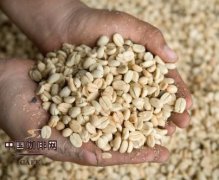
Basic knowledge of how to select high-quality coffee by hand
Hand selection: is the step of removing impurities and bad beans attached to delicious coffee beans. Coffee beans are often mixed with foreign bodies, such as stones, sawdust, pieces of metal, grains of soil, fruit of trees, and sometimes coins and glass. In coffee production areas, specific gravity bean selector (using wind power to classify according to particle size and weight) or electronic bean selector (removing defective beans according to color) will be used to prevent it.
A detailed discussion on what is meant by manual selection of beans
What is hand-selected: it is a step to remove impurities and bad beans attached to delicious coffee beans. Coffee beans are often mixed with foreign bodies, such as stones, sawdust, pieces of metal, grains of soil, fruit of trees, and sometimes coins and glass. A specific gravity bean selector (which uses wind power to classify according to particle size and weight) or an electronic bean selector (to remove defects according to color) is used in coffee production areas.

What is hand-selected coffee to learn the basics of coffee beans
What is hand-selected: it is a step to remove impurities and bad beans attached to delicious coffee beans. Coffee beans are often mixed with foreign bodies, such as stones, sawdust, pieces of metal, grains of soil, fruit of trees, and sometimes coins and glass. A specific gravity bean selector (which uses wind power to classify according to particle size and weight) or an electronic bean selector (to remove defects according to color) is used in coffee production areas.

What do you mean by hand selection of coffee beans? What is hand-selected coffee beans?
What is hand-selected: it is a step to remove impurities and bad beans attached to delicious coffee beans. Coffee beans are often mixed with foreign bodies, such as stones, sawdust, pieces of metal, grains of soil, fruit of trees, and sometimes coins and glass. A specific gravity bean selector (which uses wind power to classify according to particle size and weight) or an electronic bean selector (to remove defects according to color) is used in coffee production areas.